



Key Takeaways
- Managing resellers manually becomes unscalable as your print business expands, resulting in delays, errors, and missed opportunities. Automating these workflows is essential for sustainable growth.
- PrintXpand’s scalable print-on-demand (POD) system streamlines reseller onboarding by offering a self-service portal where sellers can sign up, access personalized catalogs, and customize their own branding and pricing.
- Product catalog management is centralized and dynamic, allowing resellers to select, customize, and sell items from a unified source without juggling PDFs, spreadsheets, or Dropbox links.
- The built-in product designer empowers resellers to create and preview personalized products instantly, reducing the need for design support and speeding up time-to-market for seasonal or trending items.
- Seamless integrations with platforms like Shopify, WooCommerce, and Magento allow resellers to publish products and sync orders directly, eliminating repetitive manual processes and reducing operational errors.
- Order fulfillment is fully automated through a centralized backend system, enabling white-label services and real-time tracking while maintaining high quality and brand consistency.
- With PrintXpand, print houses can scale from dozens to thousands of resellers without increasing administrative overhead, turning their print infrastructure into a growth-ready, multi-seller POD platform.
For Print Houses and Print warehouses, removing dependency on the businesses that get you the orders is the key to unlocking scalability. Until you remain an offline business with no connected systems, you are not in control. And, PrintXpand’s Print-On-Demand solution helps unlock this (hidden) potential.
Traders/Brokers are going to give you the orders. Online websites can get you orders. Even the independent sellers who do not even have a site but strong social media selling handles can get you orders. As a printing powerhouse, your aim is to provide a centralized system to get your printing catalog available to these sellers. And, enhance your backend operations to receive these orders seamlessly. Process them, proof them seamlessly.
That’s liberating. Getting rid of the dependency on a handful of sellers to give you the printing orders. PrintXpand’s Print-On-Demand solution can enable you to sell your catalog via such sellers globally. It can handle seller onboarding without the back-and-forth, automate product publishing across different storefronts, and manage fulfillment without you having to coordinate every single order.
The Core Challenge of Onboarding and Managing Sellers for Print Houses
Here’s how those same manual processes turn into severe bottlenecks once you’re managing more than just a handful of sellers:
Difficulty managing seller-specific branding, pricing, and products
In theory, reseller requirements can be tracked through spreadsheets, phone calls, emails, and shared documents. For example, logos and branding guidelines might be spread across several email threads, product catalogs could be stored in shared folders, and pricing structures may need to be updated individually. While manageable for a small number of resellers, this approach quickly becomes a logistical nightmare as your network grows.
Every reseller requires unique branding, dynamic pricing, and curated product selections. The mix of emails, phone calls, and spreadsheets introduces constant updates, version conflicts, and manual overrides, leading to inconsistencies. For instance, one reseller might see the wrong price, while another might gain access to unauthorized products. Instead of empowering growth, this manual system becomes a bottleneck that introduces risks and errors, creating more problems than it solves. In theory, you can manage reseller requirements in spreadsheets, such as logos in one column, product catalogs in another, and pricing tiers tracked across multiple tabs. While those requirements also come from various channels, such as print-ready files received via email, the size can be discussed over a phone call.
But in practice, every reseller demands unique branding, dynamic pricing structures, and curated product selections. This turns spreadsheet management into an administrative nightmare. Constant updates, version conflicts, and manual overrides create inconsistencies, where one reseller sees the wrong price and another gains access to unauthorized products. Instead of enabling growth, your “system” becomes a bottleneck that introduces risk and creates more problems than it solves.
Lack of integration with external storefronts (Shopify, WooCommerce, etc.)
Resellers rely on platforms like Shopify, WooCommerce, and Magento to sell, but without native integrations to your print fulfillment system, the process breaks down. Each product must be manually uploaded, including images, descriptions, and SKUs, for every storefront. Order data doesn’t flow automatically between reseller stores and your backend, forcing double entry and creating operational bottlenecks. What begins as a manageable process with a few resellers becomes unsustainable at scale, draining hours of administrative effort and increasing the likelihood of human error.
Manual order processing and errors in personalization
Print-on-demand thrives on customization. But without automation, every personalized order becomes a manual project. Files need reviewing, artwork requires approval, and personalization requests come through fragmented channels, such as emails or shared folders. Low-resolution uploads and missed details introduce costly production delays and reprints. At scale, these inefficiencies compound, slowing fulfillment speed, inflating overhead, and frustrating both resellers and their end customers.
High operational overhead for onboarding and training sellers
Each new reseller requires an individualized setup, including catalog creation, pricing sheet distribution, and one-on-one training. These repetitive tasks consume support bandwidth and bury teams in administrative work. Instead of focusing on reseller growth and customer success, your staff spends their time duplicating the same processes repeatedly. And that results in higher operational overhead and a cap on how far your reseller network can realistically scale.
All these issues point to the same reality: manual systems can’t keep up once you start growing your reseller base. What feels manageable with five resellers becomes chaotic when that number increases to fifty. To scale without breaking, you need a system that automates the grind while still giving you control.
This is where PrintXpand’s scalable print-on-demand solution can be implemented. It can equip your print house with the tools to streamline seller management while maintaining quality control and operational efficiency.
How PrintXpand’s Multi-seller Print-on-Demand System Can Solve This
Step 1: Seller Onboarding Without the Spreadsheet Circus
Running a multi-seller POD business is only complex if you let it be. Below, we break down the steps that simplify the entire process.
Think about how you’re onboarding sellers right now. Emails bouncing back and forth. Logos are lost in shared folders. Half-filled spreadsheets and constant double-checking just to make sure nothing’s been missed. It works when you’ve only got a handful of resellers. However, adding more causes the whole process to collapse. Every setup drags on, and worse? Every seller has a slightly different experience.
This is where PrintXpand’s solution can be implemented to eliminate all of this through automated reseller onboarding print on print-on-demand platform functionality.
Resellers or independent store owners can sign up directly through your branded POD portal. The seller onboarding process becomes simple, with options for custom branding, permission settings, and instant access control. In short, wouldn’t have to step in manually every time. And more importantly, you would be able to grow your reseller network without increasing your administrative workload.
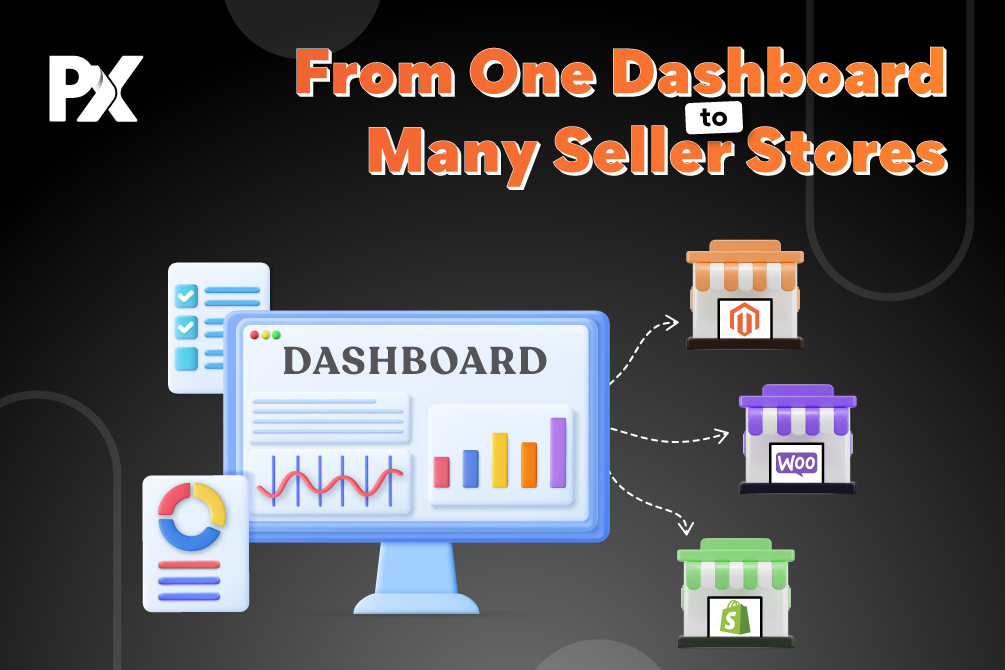
The reseller onboarding print-on-demand platform would also provide each seller with their own dedicated dashboard. They get customized pricing and see only the product catalogs you’ve allowed access to. This setup provides a clean, professional experience, making your business appear as a smart, scalable print-on-demand solution for print houses, rather than just a backend print fulfillment software provider.
| Expert Tip | |
|---|---|
|
Don’t keep your onboarding process siloed. When you bring in a new reseller, ensure their data flows seamlessly into your CRM or ERP. That way, you’re not entering the same details twice, you’re not chasing missing information, and you’re not scrambling later when orders hit your system. One setup, and you’ve got finance, order tracking, and inventory all aligned from day one. |
|
Step 2: Product Access Without PDF Catalogs or Dropbox Links
Gone are the days of maintaining separate product catalogs, PDF files, and shared Dropbox folders for each reseller. With PrintXpand, you can implement a centralized product catalog that connects with major suppliers like 4over, SanMar, and PF Concept. If your supplier network is different, the platform can also support custom integrations to ensure your catalog syncs smoothly with your chosen fulfillment partners.
All products in the catalog can be set up as print-on-demand, so resellers don’t have to worry about inventory, storage, or stock management. Instead, they can browse the catalog, pick what fits their brand and audience, and start customizing right away.
By implementing this centralized setup, you maintain consistency across your multi-seller print-on-demand system while still giving each reseller the freedom to choose products that match their specific market needs.
That being said, two common concerns often come up when managing supplier relationships and dynamic catalogs. The first is, “What if different resellers need different products?” This is addressed with catalog segmentation. Smaller boutique sellers can be limited to a curated range, while enterprise resellers can be given access to an extended catalog. The second concern is, “What happens when suppliers update stock or pricing?” Thanks to real-time sync, those updates are reflected automatically, so resellers always see accurate product data without needing manual changes from you.
Step 3: Use Built-in Product Designer
One of the most powerful features of PrintXpand’s system is the integrated product designer tool that enables sellers to personalize products without requiring design skills or external software. This eliminates the common bottleneck where resellers need design support or struggle with complex customization processes.
Sellers can edit text, add images and logos, choose colors, and apply artwork using predefined templates, fonts, and layouts. The designer also includes live preview functionality so sellers can see exactly how their customized products will look before publishing them to their stores.
This self-service approach dramatically reduces support requests while enabling faster product creation and market responsiveness. As a result, sellers can capitalize on trends, seasonal opportunities, and customer requests without waiting for design assistance.
Using a pre-built product design tool also leads resellers, who work independently and design their own products, to ask, “What happens if a seller uploads a low-resolution image?” The system flags low-resolution uploads with automated DPI warnings and can block files that don’t meet print-quality thresholds, helping to prevent quality issues before production.
Step 4: Publish Personalized Products to Their Store
After creating customized products, sellers can push them directly to their Shopify, WooCommerce, or other storefronts with a single click. This includes complete product information, such as features like images, descriptions, pricing, and variants, eliminating the need for manual copy-pasting and upload processes.
PrintXpand offers ready-made integrations with Magento, Shopify, and WooCommerce, as well as compatibility with other platforms through flexible API development. This means that if you have sellers using different eCommerce platforms or marketplaces, such as Amazon or Etsy, custom integrations can be developed to ensure seamless connectivity across your entire network.
Therefore, the Shopify print-on-demand integration and print-on-demand WooCommerce integration capabilities make it easy for sellers to connect their existing stores.
The automated publishing process ensures consistency in product presentation while allowing each seller to maintain their unique brand identity and pricing strategies within your defined parameters.
| Expert Tip | |
|---|---|
|
Audit your current printing and fulfillment workflows to find bottlenecks or manual processes. Plan your integrations carefully to ensure compatibility with the popular eCommerce systems (Shopify, WooCommerce, Magento) that your resellers may be using. And if you plan to use bespoke storefronts (Amazon, Etsy, etc.), discuss your API requirements beforehand. |
|
Step 5: Receive Orders on Your Own Platform
When customers place orders on reseller websites, those orders automatically sync back to your main POD platform for fulfillment processing. This creates a seamless flow from customer purchase to print production, eliminating the need for manual order entry or data transfer.
Your print business handles all fulfillment, printing, and shipping operations while maintaining complete white-label service if desired. Resellers can offer their customers a fully branded experience while you manage the backend operations efficiently.
This centralized order management system provides you with complete visibility into the performance of your entire network. Additionally, it ensures consistent quality control and fulfillment standards across all reseller channels.
As the entire ordering process runs behind the scenes, the obvious question that comes up is, “Can each reseller have specific production or shipping rules? Well, yes. Admins can configure seller-specific fulfillment logic, such as preferred print location, delivery method, or turnaround time, within platform settings or via custom rule sets.
Step 6: Real-Time Tracking & Analytics
You and your resellers benefit from the platform’s full tracking and analytics features. Sellers can access order statuses, shipment tracking information, and basic sales data through their dashboard, which reduces support requests and enhances customer service.
The tracking system connects with top shipping providers to provide automatic updates, giving resellers and customers complete visibility throughout the fulfillment process. Such transparency fosters trust while reducing the administrative effort required to handle order status messages.
Real-time visibility also helps reduce reseller support requests, since resellers can check order status and shipping updates directly from their dashboards. At the same time, built-in analytics enable admins to monitor reseller performance across the network, tracking sales, order volumes, fulfillment rates, and other key metrics. These insights enable smarter business decisions and growth planning.
Advanced analytics enable you to assess network performance, identify top-performing resellers, and enhance your product offerings using actual sales data from throughout your entire network.
How PrintXpand Can Implement Solutions for Real Business Challenges
Scenario 1: Managing Product Creation for 100+ Independent Resellers
Every print-on-demand business faces unique challenges in scaling. By looking at common situations, it becomes clear how PrintXpand can implement the right tools to streamline operations and unlock growth.
A growing POD platform owner has brought on over 100 resellers. Each one wants to sell personalized print products, such as mugs, t-shirts, and business cards. But creating designs and listings for every reseller by hand takes too much time. It’s time-consuming, inconsistent, and prone to errors that damage relationships and slow growth.
Solution with PrintXpand: The multi-seller print-on-demand system can implement centralized catalog access and a built-in product designer, enabling resellers to create and personalize products independently using templates and design tools. Finished products can then be published directly to Magento, Shopify, and WooCommerce without requiring assistance from the POD platform owner.
What the solution enables:
- Significant reduction in manual support requests for product setup
- Faster reseller onboarding and quicker time-to-market for new products
- Consistency in product quality across resellers
- Flexibility for seller-level customization without compromising quality
- Scalable growth without a proportional increase in support staff
- No proportional increase in support staff despite growth
Scenario 2: Custom Branding and Storefront Control for Each Reseller
Resellers demand unique brand identities and customer experiences. They refuse to use the POD owner’s branding, catalog structure, or packaging, but managing individual white-label requirements for hundreds of sellers creates operational complexity that threatens quality control and consistency.
Solution with PrintXpand: The print-on-demand solution for print houses can implement white-labeled portal access for each reseller, complete with customized pricing structures and packaging options. The POD owner maintains full control over fulfillment processes, quality standards, and operational rules behind the scenes, while resellers deliver fully branded experiences to their customers without any visible connection to the platform.
What the solution enables:
- A seamless white-label print-on-demand (POD) business model
- Higher seller satisfaction and improved retention rates
- Independent brand scaling for resellers without added complexity
- Backend operational control for the POD owner with no front-facing involvement
- Stronger long-term partnerships between the POD owner and resellers
- Sustained network growth across the reseller ecosystem
Scenario 3: Sellers Need Real-Time Product Personalization and Publishing
Newly onboarded sellers want to quickly create and launch seasonal or trend-based products like Halloween mugs or personalized graduation gifts. Without fast, intuitive tools, they consistently miss market timing and lose sales opportunities, which reflects poorly on the entire POD network’s competitiveness.
Solution with PrintXpand: The solution can implement a built-in product designer that enables sellers to create personalized products in minutes using professional templates, design assets, and live preview functionality. Sellers can instantly publish finished products to their connected stores without requiring design software, technical skills, or support from the POD platform owner.
What the solution enables:
- Reduced time-to-market from days to minutes
- Resellers are able to capitalize on trending opportunities and seasonal demands
- Increased order volume across the reseller network
- No additional workload added for the POD platform owner
- A proven ability to scale both efficiency and revenue simultaneously
POD System Built for Scalable Seller Networks
For your print house or your business with printing infrastructure, PrintXpand can implement the capabilities needed to expand beyond direct-to-consumer orders. It can transform your existing setup into a comprehensive multi-seller print-on-demand system, empowering unlimited resellers to launch and grow their own storefronts while you continue to focus on high-quality fulfillment.
Whether you want to onboard just a few sellers or scale to thousands, PrintXpand can implement the essential tools for efficient growth. Ready integrations with Magento, Shopify, and WooCommerce can implement support for the most common platform requirements. At the same time, flexible API connectivity ensures compatibility with other platforms, so that no potential reseller is left behind.
The built-in product designer can implement zero-touch personalization, helping to reduce support overhead while maintaining professional quality standards. At the same time, custom-branded packaging, neck labels, and pack-ins can implement the reseller branding opportunities needed to build stronger brand identities that drive customer loyalty and repeat business.
Centralized order management, seller administration, fulfillment coordination, and tracking systems can implement complete operational control for your print business while still enabling the autonomy resellers need to succeed. With PrintXpand, your print business can implement scalable growth that becomes the foundation for others to build their success upon.
All product and company names are trademarks™, registered® or copyright© trademarks of their respective holders. Use of them does not imply any affiliation with or endorsement by them.