



Long gone are the days when mobile phones were just… phones. With everything going the customized route, even phone skins are getting personalized. And, no, this is not just about finding the right phone cover; people are now talking about premium vinyl, custom artwork, and textures that feel expensive.
Customers don’t want to settle for whatever color is predetermined by the company; they want something that actually feels uniquely theirs. That hunger for personalization is exactly why mobile skin design trends 2026 deserve attention right now.
Not after the trends hit mainstream. Before. The brands paying attention today will own market share tomorrow while everyone else plays catch-up.
Trend #1: Hyper-Personalized AI-Generated Designs
Five years ago, this would’ve sounded ridiculous. But today, you give a few preferences — favorite colors, hobbies, aesthetic vibes — and software gives out a unique pattern. No designer. No templates. That’s exactly where things are heading. The output quality has gotten genuinely impressive. Not “good for AI,” impressive but actually good.
The business math works beautifully too. Mass customization used to be an oxymoron. Now one customer can experiment with fifty variations before breakfast without anyone at the company lifting a finger. Each person gets something nobody else has. That exclusivity feeling? It sells.
What gets interesting is the creative freedom this unlocks. Customers who’d never consider themselves “design people” suddenly feel comfortable playing around. They’ll try wild combinations they’d never ask a human designer for. Sometimes those experiments turn out amazing.
Trend #2: Sustainable & Eco-Friendly Materials
Something changed in how people shop. They started asking uncomfortable questions. Where’d this material come from? What happens when I toss it? Is this company actually trying, or is it just slapping “green” on everything?
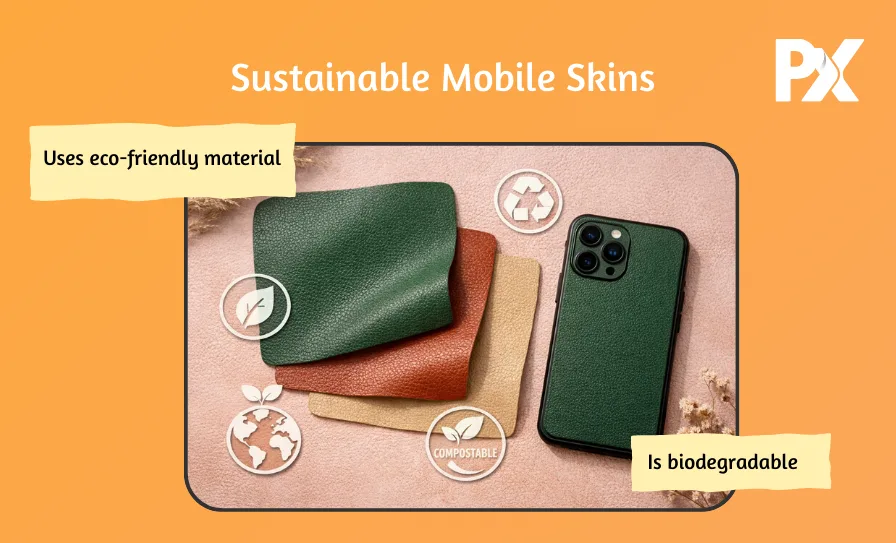
Mobile skin buyers aren’t excused from this shift. Recycled vinyl, biodegradable adhesives, low-waste production — these aren’t premium upsells anymore. They’re becoming baseline expectations, especially with younger customers who’ve spent their entire lives watching climate news.
The aesthetic side of sustainability has its own momentum. Earthy tones everywhere. Forest greens, terracotta warmth, sandy neutrals, botanical illustrations. These palettes signal something about the person carrying that phone. Values made visible. Brands figuring out genuine sustainability without quality compromises or ridiculous price hikes? They’re positioned to dominate the current and future markets.
Trend #3: 3D Texture & Tactile Skin Designs
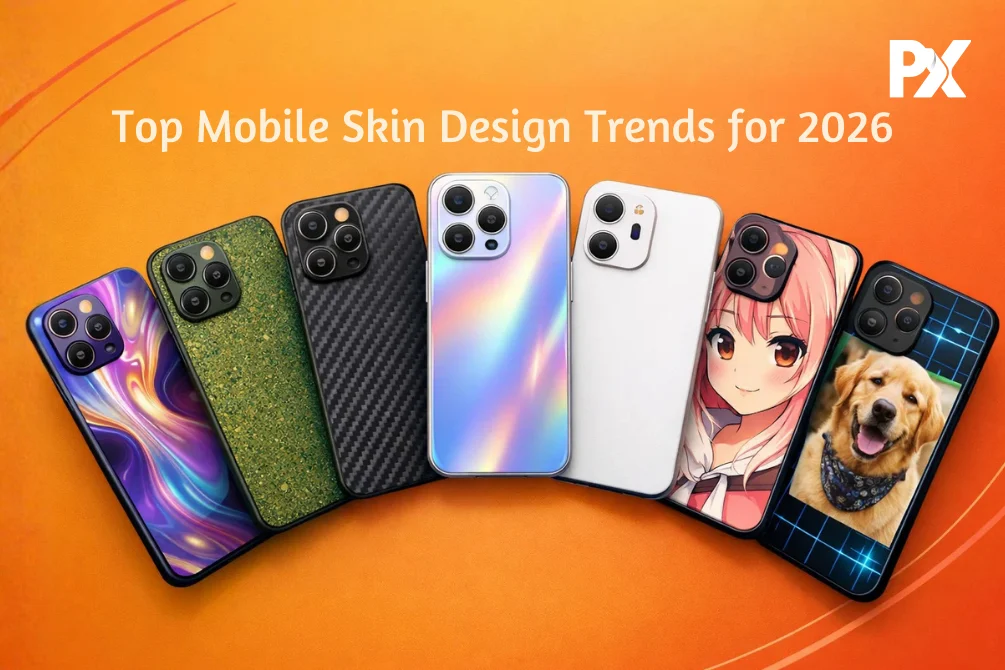
Flat skins work fine. They do the job. But picking up a phone with actual texture, like the feeling of carbon fiber weaves under your thumb, leather grain warming from your hand, sandstone grit that just feels expensive — that’s different. That’s memorable.
2026 pushes this further. And technology is facilitating this shift for example, embossing techniques that create genuine dimension and layered printing that you could identify blindfolded. It is pitched as a practical approach that improves grip, leading to fewer drops, fewer cracked screens, and fewer insurance headaches. This goes beyond the aesthetic element.
The premium segment drives this trend hardest. Someone spending serious money on a flagship phone won’t tolerate a skin that feels cheap. Texture delivers quality perception instantly — before they even look at the design itself.
Trend #4: Holographic, Neon, and Light-Reactive Skins
Subtlety isn’t for everyone. Some folks want their phone to look like it teleported from a cyberpunk film. Good for them, honestly. Holographic finish that makes the colors shift, neon patterns that glow under club lighting, or iridescent effects that look like magic.
This category exists for people who want attention and aren’t shy about it. Gen Z gravitates here hard. Gaming communities, too. These are crowds raised on RGB everything keyboards, mice, and entire PC builds lit up like festivals. A phone catching light and demanding notice fits perfectly into that world.
The business angle worth remembering here is that these skins basically market themselves. Someone posts a video of their holographic skin catching sunlight, you’ve got free advertising. The visual drama handles the selling. That matters when customer acquisition keeps getting pricier.
Trend #5: Minimalist & Clean Aesthetic Skins
Then there’s the opposite crowd. People who see busy patterns and feel physically exhausted. Who want their phone looking like Scandinavian furniture showroom inventory. Clean. Quiet. Nothing is begging for attention.
Apple’s design influence runs deep here. That less-is-more philosophy makes simplicity feel expensive. Matte charcoal without logos. Soft blush pink, perfectly consistent. Pure white that actually photographs clean.
Here’s the catch, though — minimalist designs expose every flaw ruthlessly. No patterns distracting from imperfections. Print quality better be flawless. Colors better match exactly. Edges better cut perfectly. Anyone using a mobile skin design tool for these orders has zero tolerance for sloppiness. Simplicity is the whole point. Anything disrupting it ruins everything.
Trend #6: Anime, Pop Culture & Fandom Collections
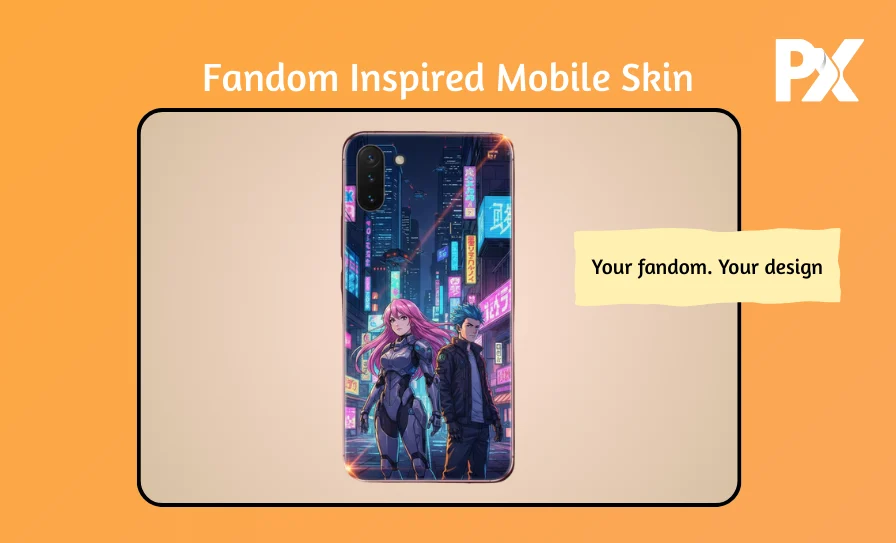
Fandoms spend ridiculous amounts of money. And they’re constantly hunting for ways to broadcast their tribe membership. Phone skins featuring beloved characters or iconic imagery? That’s identity advertising carried around daily.
Anime aesthetics went fully mainstream. What used to be niche now appears on fashion runways and Super Bowl commercials. The visual language of Japanese animation shapes color palettes and illustration styles far beyond its original audience. Comic universes, gaming franchises, movie properties — all these worlds have hungry fans wanting merchandise that doesn’t look lazy or cheap.
Licensing might get complicated and expensive, though. Smart operators create original work capturing the feeling of popular properties without legal trouble. A cyberpunk cityscape evoking the atmosphere of a certain game. Illustration styles adjacent to beloved anime without copying directly. This demands real creative talent, and a phone skin designer tool handling detailed artwork becomes essential for serving this market properly.
Trend #7: Tech-Themed Futurism (Cyberpunk, Digital Grids, Sci-Fi)
Tech people want tech aesthetics. Groundbreaking observation, right? But seriously, there’s a huge demand for designs that feel like science-fiction props. Glowing circuit patterns. Digital rain effects. Neon-outlined grids against matte black. Glitch textures that look intentionally corrupted.
This stuff speaks to specific identities. Gamers. Streamers. Developers. People building custom PCs for fun and holding opinions about mechanical keyboard switches. Their devices form part of their persona. Everything should match.
That matching instinct creates opportunity. Offering coordinated designs across phones, tablets, and laptops captures customers who’d otherwise buy from multiple vendors. One aesthetic, one purchase. Better cart values, stronger loyalty.
Trend #8: Photo-Based & Template-Driven Custom Skins
Personal photos on products aren’t revolutionary. What’s changed is how polished results can look without customers needing any design skills whatsoever. Couples wanting anniversary photos on matching skins. Pet owners are putting their dog’s face on everything. Travelers are turning that perfect sunset into a daily visual companionship.
The emotional weight these designs carry crushes anything generic. Templates also evolved dramatically. Pre-built layouts make amateur photos look professional. Frames add visual interest without overwhelming. Text options that don’t scream “made this in Paint.”
For businesses, mobile skin design software handling these workflows smoothly isn’t optional. Customers expect easy processes and great results. Any friction — confusing interfaces, ugly previews, disappointing outputs — kills repeat business dead.
How Mobile Skin Design Software Supports These Trends
Beautiful concepts mean nothing without execution capability. And, technology makes or breaks everything.
Real-time customization is expected now. Customers want exact previews before committing. Not approximations but exactly what they’re getting. Quality mockups that match final prints build the confidence needed for purchase.
AI assistance is becoming standard. Users want template suggestions based on inputs. Auto-adjustments are improving uploaded photos. Recommendations guiding customers toward combinations that actually work. These features help design novices create results worth bragging about.
Backend operations matter equally. Print-ready files are generated automatically. E-commerce platforms synced properly. Production workflows are moving smoothly from order to shipment. The right software handles this invisibly. Wrong software turns every order into a migraine.
Tips for Businesses Selling Custom Mobile Skins in 2026
Awareness alone accomplishes nothing. Execution matters.
Bundle strategically. Device families; phone, tablet, and laptop in coordinated designs command premium pricing. Customers appreciate convenience; you appreciate cart values. Monthly collections keep catalogs fresh. Limited editions simulate urgency. Regular drops give return visit reasons.
User-generated content beats polished advertising. Feature customer photos. Encourage sharing. Build community rather than just selling to people. 3D preview functionality deserves investment priority. Customers who rotate designs and examine every angle before buying convert dramatically better. Confidence drives purchases.
Closing Lines
What mobile skin design trends 2026 reveals isn’t one dominant direction — it’s fragmentation. Personalization, sustainability, texture, bold statements, quiet minimalism, fandoms, memories. Everything coexisting, everything finding audiences.
Those who will recognize this diversity and build flexibility to serve it all will lead the market. Not gambling on single trends but creating infrastructure riding every wave.
PrintXpand delivers exactly that. A comprehensive design tool that offers real-time customization, quality previews, e-commerce integration, and production-ready outputs. It gives your business the complete foundation, letting you focus on customers instead of technology headaches.
Ready to see what’s possible? Explore PrintXpand’s web-to-print solutions and build something worth noticing.