


Sneaker culture went bizarre somewhere along the way. Not in the bad sense. Just… different. The hype shifted. Mass-produced kicks still move units, obviously. But the real heat now? Custom pairs. One-of-ones. Shoes that exist because someone designed them exactly how they wanted.
Startups figured this out quick. So did the scrappier D2C brands. When you can’t outspend bigger brands on marketing, you pivot. Offer something they can’t — or won’t — do at scale. Let buyers design their own pair. Suddenly, you’re no longer competing on the same shelf.
Here’s what changed the game: shoe design software made this accessible to anyone. What used to be, you needed factory relationships, in-house designers, and sampling budgets that’d sink a small brand before launch. Now, it’s limited to this: A lean team with the right tools can offer customization that rivals what the giants built over decades.
So, What Exactly is Shoe Design Software?
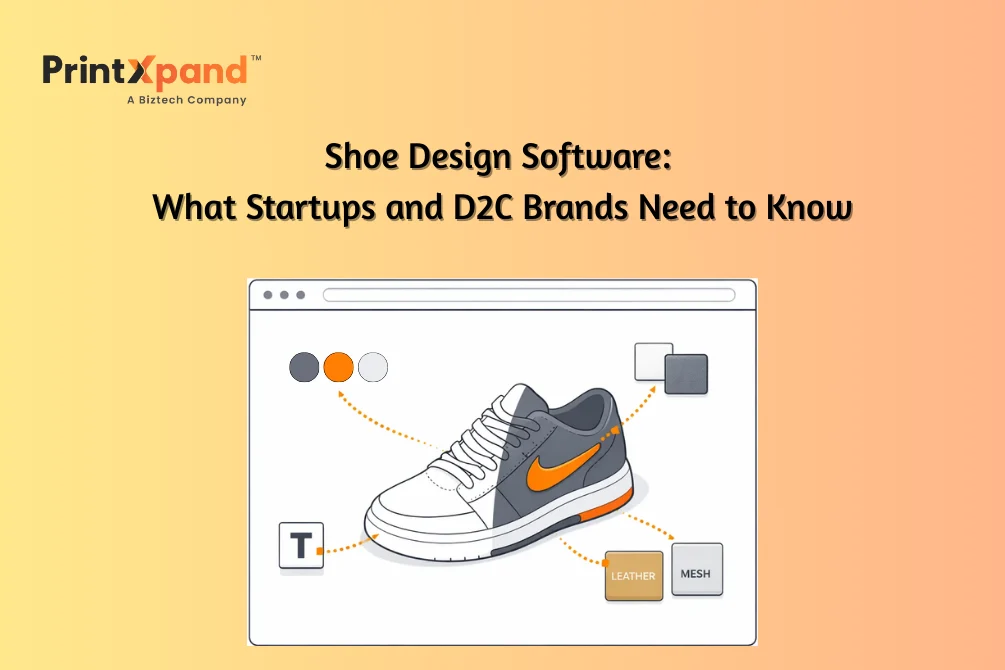
Shoe design software is basically a digital tool, usually browser-based, that lets people customize footwear visually. Pick colors. Swap materials. Add logos. See exactly what the finished shoe looks like before production ever starts.
Old-school footwear design? Totally different operational concept. Designers sketched shoe designs by hand or used specialized programs nobody else could figure out. Those sketches became physical samples. Samples got tweaked. More samples. Weeks burned. Budgets drained. And that was just to get one style production-ready.
Digital tools flip that entire process. The customer opens a configurator, rotates a 3D model of the shoe, and begins editing. Canvas or leather upper? White sole or gum? Their initials on the heel? Every change renders instantly. What they see is what they get.
Online shoe design software takes this even further; it works on any device, with no downloads or friction. Someone discovers your brand scrolling Instagram at midnight, taps through, and starts designing on their phone right there. That’s the experience modern buyers expect.
And the backend handles the messy stuff automatically. Production specs are generated from customer selections. Order data flows to manufacturing. The fun design experience up front is actually a streamlined pipeline underneath.
Why Startups and D2C Brands Need Shoe Design Software
Launching a footwear brand right now is rough. You’re up against companies with supply chains they’ve refined for decades. Marketing budgets that make yours look like pocket change. Retail relationships that are locked down tight.
Trying to beat them at their own game? Rarely leads one towards success. Customization sidesteps that whole fight.
You’re not selling the same product anymore. You’re selling something genuinely unique to each buyer. That’s differentiation money can’t buy. And that uniqueness takes the business towards success. Here’s how shoe design software changes this:
People actually engage with your site. Not just scrolling past product photos, but actively designing something. That investment changes behavior. They spend more time, convert at higher rates, and tell their friends about the shoes they made, not just the ones they bought.
Sampling costs tank. Traditional development means producing physical sample after physical sample before finalizing anything. Each one costs real money. With shoe design software, customers can see their creation digitally before going forward. Fewer samples. Less waste.
You can move faster. No more spending months guessing which designs might sell. Let customers design what they want. Watch what combinations actually get ordered. Adjust based on real data instead of hunches and focus groups.
Inventory headaches shrink. On-demand means no warehouses stuffed with stock that might not move. Order comes in, you produce it, you ship it. Cash stays liquid. Dead inventory becomes somebody else’s problem.
For D2C brands especially, online shoe design software creates direct relationships that wholesale can’t match. You own every touchpoint. You keep the data. You build actual loyalty.
Key Features to Look for in Custom Shoe Design Software
Not every tool delivers. Some look impressive in demos but frustrate real customers. Here’s what actually matters when you’re evaluating options:
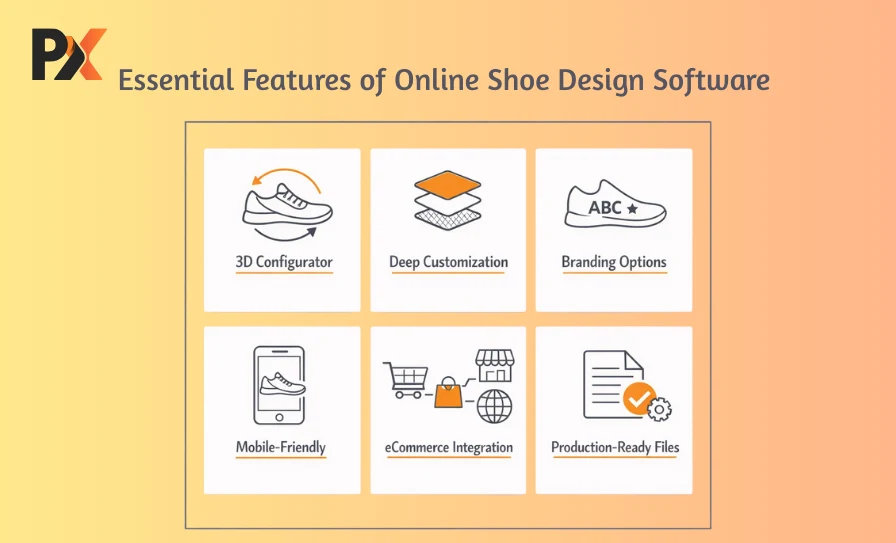
3D configurator with instant preview: Static images feel dated now. Buyers want to spin the shoe around, zoom in on details, see their choices from every angle. And “instant” matters — if they pick a new color and wait three seconds for it to load, they’re already losing interest. Responsiveness keeps people in the flow.
Deep customization options: Colors alone get boring fast. Can they swap upper materials? Choose between sole styles? Pick lace types? Texture finishes? The more meaningful choices, the more ownership customers feel over the final product. Surface-level customization disappoints.
Branding flexibility: Custom text, logos, monograms, and repeating patterns matter to individual buyers who want their name on something and to corporate clients ordering team footwear. This flexibility also opens B2B doors you might not be thinking about yet.
Works on mobile (actually): Not “technically functions” but genuinely smooth. Half your traffic, probably more, comes from phones. If your online shoe design software feels clunky on a smaller screen, you’re bleeding conversions. Test this yourself before committing.
Plugs into your existing store: The configurator needs to talk to Shopify or WooCommerce, or whatever you’re running. Orders should flow without someone manually copying details from one system to another. Disconnected tools create disconnected operations.
Outputs production-ready files: A pretty front-end means nothing if the backend creates chaos. Does the software automatically generate proper manufacturing specs? Can your production partners pull what they need without having to decode screenshots? Automation here prevents expensive mistakes.
How Shoe Design Software Supports the Whole Workflow
Customization sounds great until operational reality sets in. Gorgeous design tool up front, total chaos behind it? That’s worse than no customization at all.
The good shoe design software connects everything — customer creativity straight through to the shipped product.
Here’s roughly how it flows:
Buyer lands on your site. Opens the configurator. Picks a base silhouette. Starts playing with options — colors, materials, maybe their initials embroidered somewhere. The preview updates as they go. They like what they see. Checkout.
Now the magic happens backstage. Their design becomes structured order data. Material codes. Pantone specs. Placement coordinates for any graphics. Size info. Everything production actually needs, captured automatically from the choices they made on screen. Nobody on your team transcribes anything.
That data routes to manufacturing. Maybe your own facility. Maybe a POD partner. Maybe a factory overseas. The point is: clean handoff. Production knows exactly what to build without interpretation or guesswork.
Errors drop because humans aren’t re-entering info at every step. Wrong material shipped because someone misread an email? Gone. Sizing mix-up from a typo? Eliminated. Automation protects you from the little mistakes that add up fast.
And for startups, watching every dollar? This workflow scales. Fifty orders weekly or five hundred — same system, same process. Growth doesn’t automatically mean hiring more people to manage chaos.
How to Choose the Right Custom Shoe Software for Your Brand
Lots of options floating around. Some solid. Some will waste your time. Ask these questions before committing:
Can it grow with you? Hundred orders monthly feels different than a thousand. Will performance hold up? Are there pricing tiers or usage caps that’ll sting as volume climbs?
How deep does the customization actually go? Demo might show impressive options. Dig into what’s actually configurable. Match capabilities against the experience you want to offer. Promising depth, then delivering surface-level tools frustrates customers.
Can your team manage it independently? Adding new products, updating options, tweaking settings — do you need developers for every change? The less you depend on outside help, the faster you can move.
What’s the integration situation? Your store platform, payment systems, fulfillment partners, email tools — the software should connect without expensive custom work. Ask specifically about what you’re already using.
Who answers when things break? Support matters more than most founders realize until something goes wrong before a big launch. Check response times. Read reviews. Talk to existing customers if you can.
Is the vendor still investing in the product? Footwear tech keeps evolving. AR try-ons. AI-assisted design. Sustainability features. Is your potential partner building for that future or riding a legacy product into irrelevance?
Future of Custom Footwear and Digital Design Tools
Personalization isn’t peaking anytime soon. Customer expectations keep ratcheting up.
3D visualization already feels standard. Augmented reality — seeing the shoe on your actual foot through your phone camera — is shifting the experience from gimmick to genuine expectation. Brands offering that experience feel current.
AI is creeping into design tools too. Picture customers describing what they want in plain words and watching options generate. Or algorithms suggesting combinations based on what’s trending. The boundary between customer and designer keeps getting more ambiguous.
On-demand manufacturing infrastructure keeps maturing. Faster turnarounds. Better quality at lower minimums. More material choices. Every year the barriers drop further for brands wanting to offer custom without massive upfront investment.
For D2C footwear brands, online shoe design software is heading toward table stakes. Not optional. Not a nice extra. Just… how it’s done. The ones moving now build capabilities and customer relationships that’ll compound. Everyone else plays catch-up later against competitors who already figured it out.
Conclusion
Custom footwear isn’t some passing fad — it’s the direction the whole industry keeps tilting toward. Startups and D2C brands smart enough to embrace shoe design software now position themselves ahead of the curve. Deeper engagement. Lower development costs. Faster market feedback. Operations that scale without proportional headaches.
PrintXpand’s online shoe design software delivers everything you need to make it happen — 3D configurators, deep customization, eCommerce integrations, production-ready outputs.
Ready to let customers design their perfect pair? Explore PrintXpand and build your custom footwear experience today.