



- Summary
- Step 1. Strategic Planning & Niche Selection
- Step 2. Budgeting & Financial Planning
- Step 3. Supply Chain & Logistics Management
- Step 4. Legal Formalities & Business Registration
- Step 5. Digital Presence & eCommerce
- Step 6: Printing & Production Techniques Integration
- Step 7: Printing Method Determination
- Step 8: Launch, and Promote and Grow
- Ready to Start a Packaging Business?
Summary
Look around your house for a second. You will find tiny boxes and paper bags everywhere—chocolate in the fridge, a book delivered by Amazon, a specs case on the table, and so on.
Do you know what that means?
That packaging is everywhere. It has been around for years now.
In fact, the packaging business began 3,500 years ago in Egypt with glass and continued with mulberry bark containers in China. Then Napoleon promoted canned food. In the 1890s, NABISCO paved the way for brand packaging with its first branded consumer package. Their tin boxes featured a boy in a yellow raincoat, which was also used for advertisements.
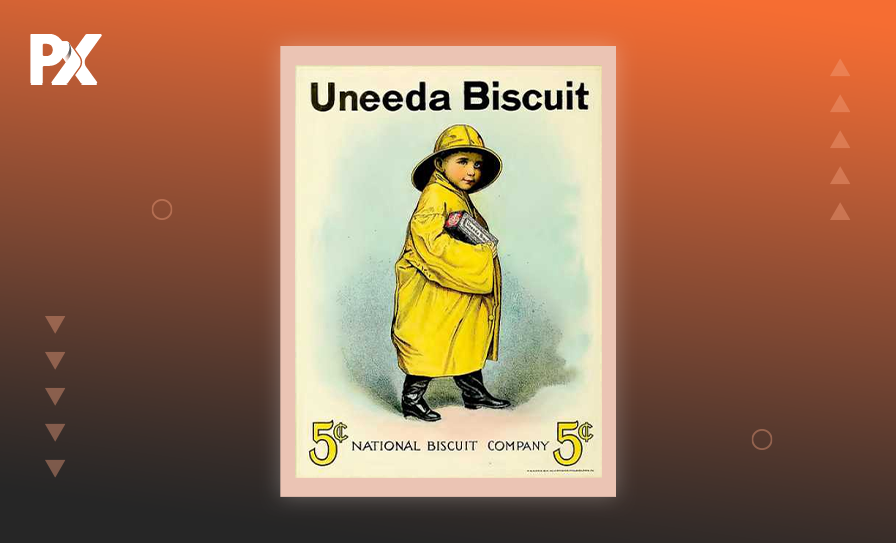
From glass in ancient Egypt to plastics, cloth, and cardboard in today’s world, it has not only witnessed various eras but also evolved alongside them. Now, the market is moving towards a more conscious approach that fosters growth without compromising the environment — yes, sustainable packaging.
In fact, according to research, the sustainable packaging market size is estimated to reach USD 518.33 billion by 2030 (source). So even though the packaging market is buzzing with exciting opportunities, today’s competitive landscape requires you to stay up-to-date with emerging trends.
Here’s a step-by-step guide to help you launch your packaging business. This will also help you understand how to navigate through the complexities of the latest industry trends and keep up with the technological advancements.
Step 1. Strategic Planning & Niche Selection
How to Ensure Versatility & Sustainability?
Since brands and packaging industries are now focusing on sustainable, smart, yet custom packaging, here are a few things that you must consider before beginning.
Choose eco-friendly options like jute bags, cardboard, recycled paper, and aluminium. These materials are either reusable, compostable, recycled, or recyclable and are in high demand. Brands look for these packaging options to prioritize sustainability.
Innovative packaging is another valuable factor that incorporates QR codes, NFC chips, and AR to enhance the customer experience while minimizing waste. It adds value to both the sustainability goal by reducing waste and to the customer experience by making the design process more interactive.
Using sustainable packaging and customizing it adds to the brand’s selling value. Creating custom designs and sizes, and even adding subscription packages, creates a unique experience for both the brand and its customers.
Start by conducting a thorough market research into these and identify which combinations will work the best for your business segment.
Step 2. Budgeting & Financial Planning
Here are some tips to effectively manage your budget:
Budgeting is important, no doubt, but you need to invest in automation to scale your business and ensure long-term sustainability. This is why strategic financial planning is just as crucial. Evaluate your variables, such as packaging type, scale of operations, machinery and equipment, raw materials, licensing and permits, marketing budgets, labor, etc.
Every business is unique, so are their strategies and requirements, this is why when it comes to budgeting, your one-size-fits-all approach fails.
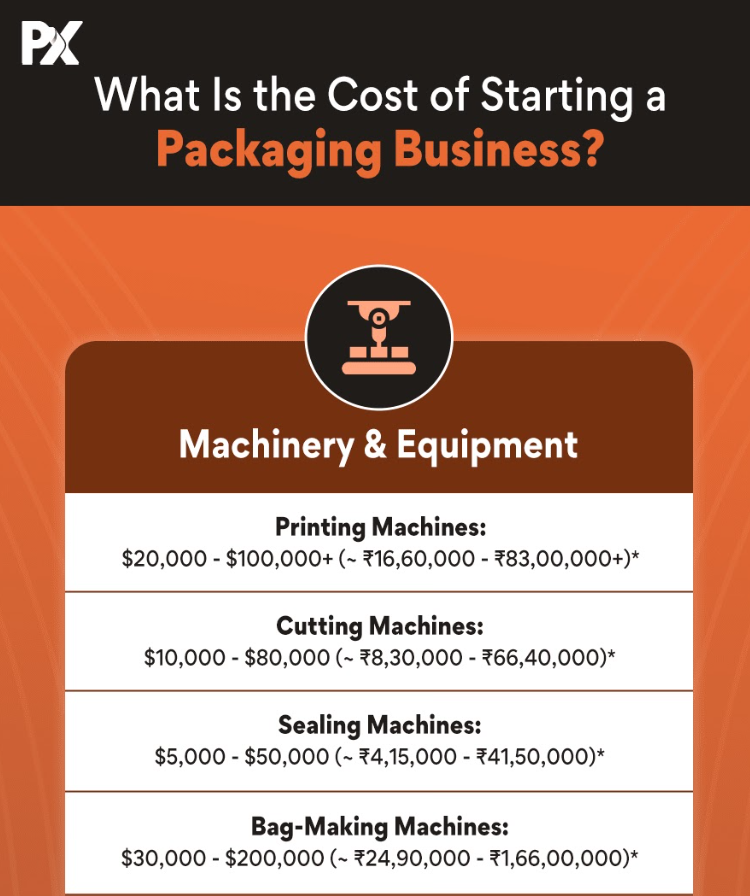
Understand your packaging needs: According to a common beliefhuman psychology, buying in large volumes helps reach a target price. However, this approach doesn’t always work. Sometimes, you end up spending more than your budget. Unfortunately, if those materials do not sell out, you will have to spend extra money to store the inventory. So, be aware of the volume of packaging that your company needs. This will help control the costs in the long run.
Save for unexpected mishaps: Business can be unpredictable. An unexpected opportunity like a special event or co-branded partnership might sometimes pop up. In such a case, setting aside a portion of the budget might help you take advantage of the last-minute opportunity.
Track your expenses: Do not wait until the end of the year to analyze the budget and make corrections. Track your expenses monthly and make proactive changes. Secondly, keep in mind that your budget won’t remain static. There are chances it may change in the middle of your business. Therefore, you must adjust it based on business growth and profits. Regularly revisiting your budget and redefining your packaging business plan will give you complete financial control and more opportunities to research and study the latest market trends. If you need help, let us guide you in building your business with Web to Print Solutions.
Step 3. Supply Chain & Logistics Management
Material Selection & Sourcing
From the material type to selecting the shipping process, understanding all areas of the packaging business is the key to successfully carrying out operations and expanding your business reach.
Some key areas of packaging that you need to focus on while working on your packaging business plan are:
Various factors, like your product, industry, branding, etc., play a considerable role in choosing the right material. Some businesses choose paper-based packaging, such as cartons, labels, rigid boxes, and pulp packs, because it costs less and holds its shape. Others, like those packaging cosmetics, home decor, personal care products, or medicines, go for glass packaging as it is inert, sterilized, and pressure resistant.
There are other options as well like metal (such as tin and aluminium for food and drink) or wood (for pallets and crates) that some people go for. In the end, it is your choice, whatever material you want to proceed with. You can also go for sustainable options that are reusable or recyclable. Doing so aligns your business with green practices and boosts the brand reputation.
Once the material is decided, you can proceed to the next step, which is manufacturer selection to source the said supplies. The questions you need to answer at this step are, “What is the quantity of my order?” and “Should I go with a local manufacturer or an overseas one?”
The process should be thorough because you cannot compromise on material quality and the delivery timeline. Make sure that you partner with someone after a thorough verification process so you get on-time quality raw materials instead of operational chaos and at the right price point.
Lastly, invest in a good logistics system for your product delivery to make sure that your customers don’t have to wait for weeks, or worse, months for their orders. Thanks to the rise of instant deliveries, having a robust and responsive logistics system is not just an add-on benefit but a need. So invest in a modern logistics system, like real-time tracking and a faster delivery system, as your business grows (if not immediately).
Learn everything about sustainable packaging, its types, and why it’s essential before you move ahead with business technicalities.
Customized Packaging
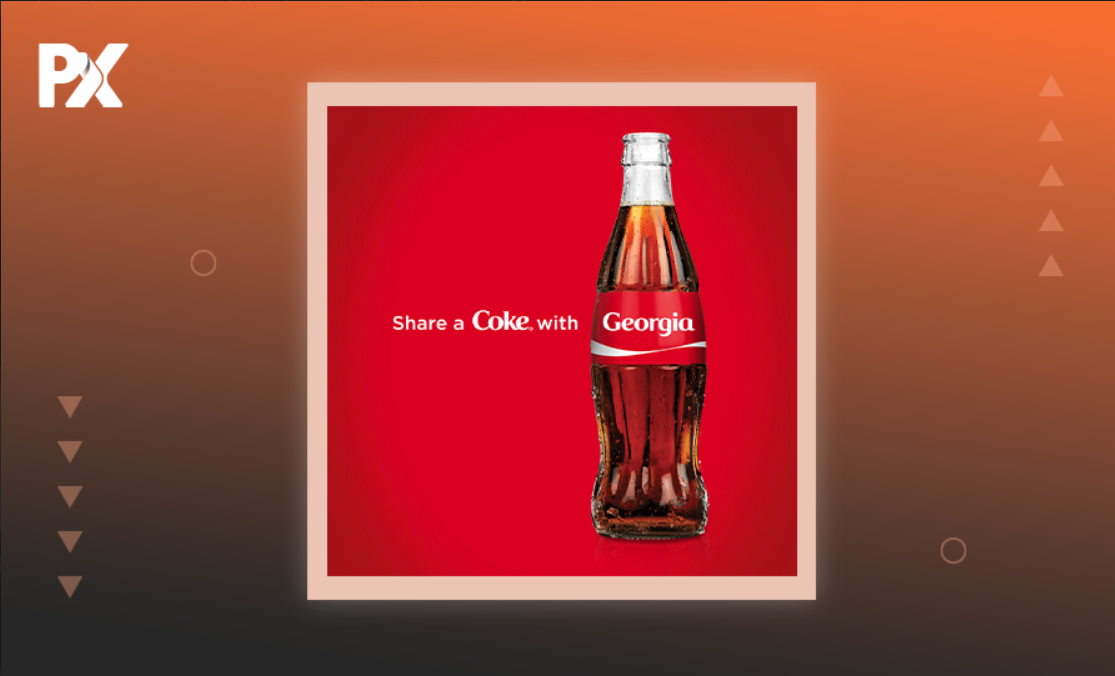
Have you heard of Coke’s “Share the Coke” campaign? Or Nutella’s jars with the buyer’s name printed on it? Or maybe Lay’s marketing campaign that allowed people to upload their face (smiles) and get that on their packet of chips?
Yeah, these are different examples of the same marketing concept, “product personalization,” and the aim behind this? To let customers create a personal connection with the brand and their products. Recent years have witnessed a rise in personalized or custom packaging, thanks to big names like Coca-Cola, Nutella, and Lays doing the same.
Customers like this concept because it creates a personalized experience, while brands see significant profits.
If you want your packaging business to stand out, you must create a fully custom experience and offer something that’s specific to your customers.
How? Using a Web-to-Print solution, you can serve customers better. It enables e-store owners like you to offer customers personalized products.
This solution streamlines your entire print business operations, reducing manual tasks and increasing your productivity. Implementing it allows you to shift your focus more on the growth of your business.
Looking for a comprehensive web-to-print solution? PrintXpand offers exactly that. See how our solution can help you kickstart your printing business.
Step 4. Legal Formalities & Business Registration
Select Company Name and Register your Packaging Business
Now that you have a basic structure of your brand, it is time to make it real, like include a lawyer in the group real. But we will walk through the whole process, step-by-step. Here’s how you need to go:
Select a name (by yourself or with the help of your friends and family) that resonates with your business. Once you have the top 3 or 5, use domain generators like GoDaddy to check availability and see what works. Remember, the best company name is short, clear, and something that reflects what you do.
Next, you will require a vendor’s license. Contact your local attorney. They will help you with all the paperwork. Further, approach your state’s Secretary of State and Department of Taxation and Finance.
Here you register the required documents. Next, as you will be making taxable sales; you need a Seller’s Permit or Vendor’s License. The rules differ from city to city or state to state. This license is important because vendors you will work with in the future might ask for it.
Get your Compliance Regulation Certification
Apart from the seller’s licenses you should also get certified with industry-specific regulations like FDA or EU regulations (for food packaging). If you want to take the sustainability route, obtaining green certifications such as FSC certification (for those who use wood as a packaging material) is beneficial. This helps you build a credible image and appeal to eco-conscious consumers.
Step 5. Digital Presence & eCommerce
Your digital presence is more important than ever. With eCommerce surging globally, you need a website that is functional and can be integrated with the latest technologies. Normally, you’ll search online and choose one from the top 5 platforms:Shopify, Magento, WooCommerce, BigCommerce, etc. Smart move.
But for long-term success, you need a fully functional, feature-rich website. So, do not make your decision spontaneously.
These are two major eCommerce solutions available in the market:
- SaaS-based eCommerce platforms
- Open-source eCommerce platforms
SaaS-based eCommerce platforms are ready-made solutions using cloud hosting. If you do not wish to focus on the technical aspects and just focus on sales, this is a good option. The vendor will take care of all aspects like web hosting, platform customization, security updates, payment processing, and others. This will require you to pay a monthly or yearly recurring fee based on the features you choose. Some of the popular options you can go for are:
- Shopify
- BigCommerce
- Squarespace
- Volusion
- Big Cartel
Open source, on the other hand, provides you with a source code that you can install and set up the site. You get complete control of your site and higher scalability and customization on the website. Working with this platform requires some technical knowledge, or you can hire a team. Popular open-source platforms are:
- WordPress
- WooCommerce plugin
- Magento
- PrestaShop
An easy way to choose an eCommerce platform is by considering the features it offers.
SEO Friendly: What do you aim for? If a user searches for a packaging company for a cookie jar then they should find your brand in the top results. Right? For ranking high in search results, you need to have an SEO-friendly platform. Go for a platform that offers basic SEO-friendly features by default.
Mobile Friendly: Given that most consumers now shop on mobile devices, make sure your website is fully optimized for mobile. This increases your reach, especially in the ever-expanding cell phone user domain.
Security: With cyber threats increasing every day, you want to protect your store from hackers. Check if the platform is secure by confirming if it supports HTTP or SSL. Even make sure that the payment options are secure to safeguard customer data.
Product Management System: Choose a platform that lets you upload a product and manage its listing for smooth operation. For this, you will need features like dynamic catalog filters, the ability to create product variations, map different shipping options, advanced product listing, etc.
Multi-channel Integration: Once your company resumes at a good pace, you will want to sell on multiple marketplaces like Amazon, eBay, Etsy, and Google Shopping along with your site. So, for this, having a platform that lets you integrate your store into other platforms is a must.
Interactive Personalization Tools: Let your customers design their packaging using an interactive design tool and AI. This improves customer engagement and provides a packaging solution that is intuitively tailored to user preferences and past orders.
Our team of developers at PrintXpand can personalize an eCommerce solution as per your business needs. The website will be adaptable to all devices, so your customers can have a consistent buying experience on any device they are viewing your website on.
Reaching out to your target audiences can also become easier because of the SEO-friendly features. You can also easily integrate any third-party service you want and enhance your eCommerce web store.
Get Build an eCommerce website as per your industry’s requirements today.
Have a team of experts by your side to personalize your e-store from scratch with PrintXpand.
Step 6: Printing & Production Techniques Integration
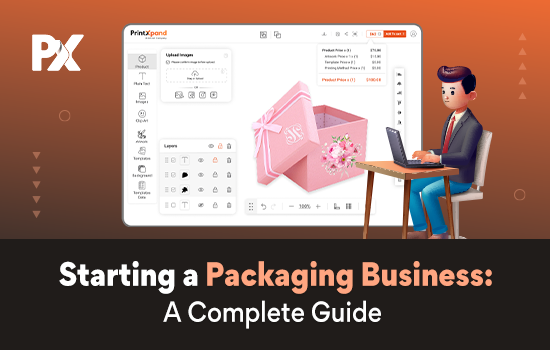
To scale your business and leverage the power of product customization, you need a web-to-print software. This software allows users to design custom packaging for commercial use on websites and place orders. Implementing it is bound to ensure a broader reach for your business.
With new printing methods like digital and UV printing pushing the boundaries of customization and color accuracy. In this era of “sustainability-focused” printing and packaging methodology, here’s what you can do:
- Invest in eco-friendly inks like plant-based or water-based inks that are less harmful to the environment.
- Implement short-run printing capabilities to cater to clients who want lower-volume, high-quality prints.
So investing in state-of-the-art printing equipment that offers high-quality, sustainable packaging solutions will set you right up for long-term success.
PrintXpand’s Package Designer Tool has an extensive range of features that can help you deliver customized labels to your clients effortlessly. They can also save their designs and reuse them later. This makes the reordering process convenient.
If you would like to know how to make your custom packaging business more impactful and profitable, this is your guide.

The intuitive UI of this tool makes it beginner-friendly and allows non-technical users to easily customize the labels they need. And once the order is placed, you can receive an editable, print-ready file. This makes your pre-press process smooth.
The tool can help your business by:
- Boosting conversions through realistic visualizations of packaging designs.
- Enabling the creation of high-quality, print-ready designs in vector format.
- Offering unique packaging designs with a wide range of customization options.
- Providing different output formats to meet your clients’ specific printing and production requirements.
- Allowing buyers to precisely position and align design elements for a polished and professional look.
- Enabling efficient management of design layers for easy editing and organization of complex packaging designs.
- Offering easy customization with a library of ready-made artworks, saving time and providing inspiration for packaging design projects.
Check out the video to get a better understanding of the tool.
Empower your customers with the power of creating the customized labels they are looking for with PrintXpand Custom Package Designer Tool.
Step 7: Printing Method Determination
Next step is to decide what printing method you will use for packaging:
Lithography: Cosmetic boxes, electronic products, and food packaging printing make use of this method. It allows you to use more than 4 colors and gives the final product a soft matte finish or a high-gloss look. The biggest drawbacks of lithography are high investment and longer lead times.
Flexography: It is popular for stand-up pouches and corrugated boxes. It has a faster turnaround time and is cost-effective. Note that as compared to lithography, flexography has noticeably lower printing quality.
Digital Printing: This is extensively popular with small-scale print jobs. Labels, films for flexible packaging, folding paper cartons, corrugated boxes— all of them use digital printing. It requires minimal tooling fees and offers a quick turnaround time. However, this method could be inconvenient to print in large volumes.
Rotogravure: Manufacturers use this method, typically for pouches and boxes—especially for food packaging. It provides long-lasting print results, but the tooling costs are pretty high.
Silkscreen: It is a good option for custom packaging. Manufacturers generally use silkscreen printing on glass and metal bottles. The production speed with silkscreen is much lower, and the process requires manual effort, sometimes resulting in poor-quality results.
Choosing the right method depends on your requirements and budget. Anyway, if you have to print high volumes at a lower cost, consider flexography. For high volumes at a moderate cost on packaging with a flat surface, choose lithography. Digital or silkscreen is a good choice for lower printing volumes. And if there are high volumes with detailed designs, then consider rotogravure.
If you are wondering which type of custom packaging is best for your business, we have a detailed list that might help you find the right one. Find it here.
Step 8: Launch, and Promote and Grow
Now that your packaging business is ready to rock, it is time to market it right, and by that we mean, develop top-notch marketing strategies. You need to create purpose driven marketing narratives that showcase your brand in a way that resonates with the current-age audience.
From creating a social media buzz and growing your email list to building a digital presence in your niche market, there’s a lot that goes into building the right marketing strategies. You can highlight your commitment to sustainability and showcase eco-friendly processes (if that’s the route you wish to choose).
You can also try influencer marketing. In the current day and age, influencers do have a major impact on brand recognition and sales. Collaborate with the ones who are working in the same niche as you. For instance, if you want to promote your eco-friendly processes, collaborate with influencers who talk about sustainability, environment friendly practices.
Finally, to ensure long term success, implement continuous improvement and take customer feedback into account. And, as your business grows, explore more opportunities to further diversify into related areas like shipping labels or packaging design services, etc.
You can also look for internal opportunities like catering packaging solutions to eco-conscious markets in Europe or North America.
Ready to Start a Packaging Business?
We hope this comprehensive packaging business plan will help you explore the opportunities that the packaging market has to offer.
Looking for a Web-to-print solution? Then, PrintXpand can be your one-stop solution. We have been in the industry for the past few years and have helped many eStore owners set up their printing businesses. Our Web-to-Print Solution has helped many businesses stand out from the crowd and attract the right set of customers. With almost 10+ years of experience working with businesses like yours, we can guide you throughout your journey.
All product and company names are trademarks™, registered® or copyright© trademarks of their respective holders. Use of them does not imply any affiliation with or endorsement by them.
FAQs
Is the packaging business profitable in 2025?
Yes, the packaging industry will be highly profitable in 2025 due to increased eCommerce, sustainability trends, and demand for customized packaging. Businesses that provide eco-friendly, innovative, cost-effective solutions will profit more!
How do I start a packaging business?
Start by researching market trends, selecting a niche (eco-friendly, custom, industrial), sourcing suppliers, investing in equipment, building an eCommerce store, and marketing effectively. To begin with, you can also choose a complete web-to-print solution to help you streamline the operations.
How do I find suppliers for a packaging business?
Identify suppliers using B2B marketplaces, trade exhibitions, and industry directories. Check for quality, price, and sustainable practices. Further, establish long-term production and supply chain partnerships to improve cost efficiency and reliability.