



Running a print shop in 2026 is very chaotic, and the constantly increasing investment makes it all the more difficult. Equipment costs? Through the roof. A decent wide-format printer now equals what an entire shop setup used to cost back in 2010. And demand? It’s unpredictable. Dead quiet one week, then three clients need everything tomorrow.
This is exactly why print outsourcing stopped being the backup plan. It’s now just how smart shops operate. Some outsource overflow during crazy seasons. Others use partners for stuff they’d never produce themselves, such as specialty packaging, massive banners, and more.
But what really changed the game? Web-to-print platforms. They took print outsourcing from a mess of phone tag and crossed fingers to something you can actually manage. Centralized. Trackable. Scalable. That’s the shift we’re digging into here.
What Is Print Outsourcing?
Nothing complicated. Print outsourcing just means you’re handing production work — some or all of it — to another printer. It could be a trade printer down the street or a specialty shop three states away. You’re leveraging their equipment and capacity instead of doing everything yourself.
Now, this plays out differently depending on what you need:
- Volume-based outsourcing kicks in when you land a contract that’s bigger than your press schedule can handle. Rather than saying no or burning out your crew, you ship the job to someone with bandwidth.
- Specialty outsourcing covers the equipment you don’t own. Wide-format. Flexo labels. Rigid packaging. Embroidery. Why spend $200K on a machine you’ll touch maybe twice a year?
- Overflow outsourcing is your peak-season pressure valve. Election years. Holiday rushes. Back-to-school madness. Having partners who can absorb the surge keeps you sane.
Print shops use this model constantly. So do marketing agencies juggling campaigns across twenty cities, franchises needing identical output everywhere, and corporate buyers tired of wrangling a dozen vendors.
Where Traditional Outsourcing System Falls Short?
Anyone who’s done print outsourcing the old way knows the drill. Phone calls to nail down specs. Email chains with artwork bouncing back and forth. Spreadsheets tracking which vendor has which job. It’s exhausting.
And the problems pile up fast.
Proof approvals turn into a nightmare. Someone signs off on version 3 while the vendor has already started running version 2. Congrats — you’re eating a reprint.
Job visibility? Nonexistent. You’re calling vendors asking, “Where’s my order?” instead of selling new work. Comparing quotes across partners becomes its own project. Different formats, different assumptions, different turnaround definitions. You’re never quite sure you’re comparing the same thing.
Data entry errors creep in everywhere. Specs get copied wrong. Paper stock gets transposed. Finishing instructions vanish somewhere between your inbox and their production floor. Every mistake means rework and awkward client conversations.
And files? Good luck finding the right version three months later when someone wants a reprint. You’re digging through email threads, hoping you grab the correct artwork.
How Web-to-Print Transforms Print Outsourcing
Web-to-print fixes this mess by pulling everything online and into one place.
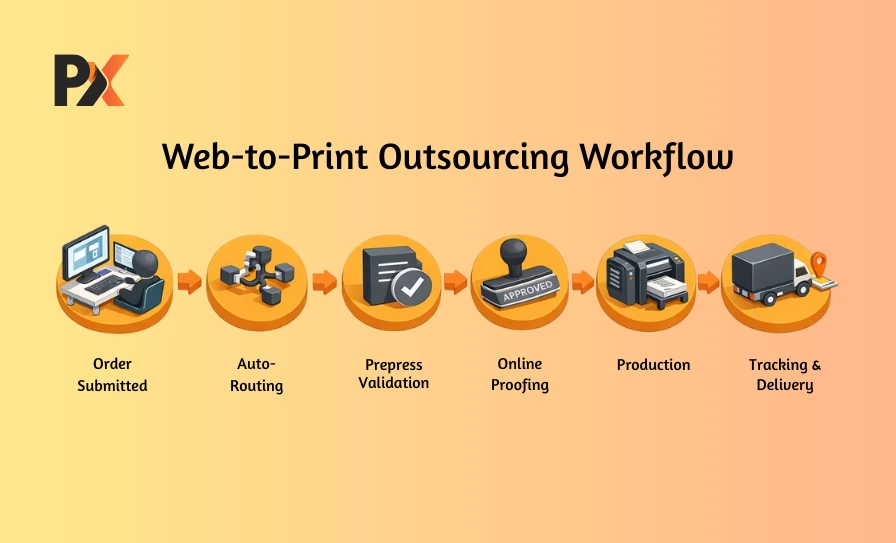
Jobs get submitted through a single portal. Complete specs attached. Artwork uploaded. No more scattered emails or verbal orders that get misremembered.
Order routing happens automatically. You set the rules once — by product type, turnaround, location, and cost — and the system sends jobs to the right partner without you doing any labour work.
Files go through automated prepress checks before they hit production. Wrong color space? Flagged. Low resolution? Caught. Missing bleed? Fixed. Problems get spotted before they become expensive.
Proofing moves online, too. Clients review, comment, approve — all timestamped and documented. No more disputes about who approved what and when.
And tracking? Everyone sees the same status updates. Your team. Your vendors. Your customers. Production started, shipped, and delivered — it’s all visible without making a single phone call.
This is why print outsourcing through web-to-print actually works at scale. You can add partners, handle bigger projects, serve more clients — without drowning in admin work. This simplifies business growth, helps you expand your network, and that too, without disrupting your workflow.
Key Features of a Web-to-Print System That Simplify Print Outsourcing
One thing that definitely complicates the web-to-print implementation is choosing the wrong solution. Not every platform handles outsourcing well, which, in turn, discourages staff from adopting the solution. So when you are choosing your platform, look for these features:
- Multi-Vendor Management: To onboard multiple partners, track their capabilities, see their pricing, and turnaround all in one system.
- Automated Job Routing: Apply rule-based logic that assigns jobs to vendors based on your criteria. Set it and forget it.
- Online Proofing & Approval: Review and approve proofs inside the platform. Annotations, timestamps, audit trails.
- Centralized Order Dashboard: Implement a single dashboard that shows all jobs across all vendors. Filter by status, date, product, and customer.
- Prepress Automation: Automate file validation, format conversion, and preflight checks. Production-ready files every time.
- Pricing Transparency: Set clear vendor costs, your markups, and actual margins. Quote with confidence.
Benefits of Using Web-to-Print for Print Outsourcing
When these pieces click together, operations actually improve:
Faster processing: Jobs move from order to production in hours, not days. No waiting around for callbacks or chasing confirmations.
Fewer errors: Standardized inputs and automated checks catch problems early. Reprints drop significantly.
Consistent quality: Same specs, same proofing process, same expectations across every vendor.
Smoother collaboration: Partners work inside the same system you do. Shared visibility creates accountability on both sides.
When these things work together, you can handle more order volume without hiring more people or equipment. Your revenue increases significantly with minimal investment in resources. It also allows you the space to experiment with newer technologies without actually purchasing them before you are sure it will pay off.
How PrintXpand Supports Efficient Print Outsourcing
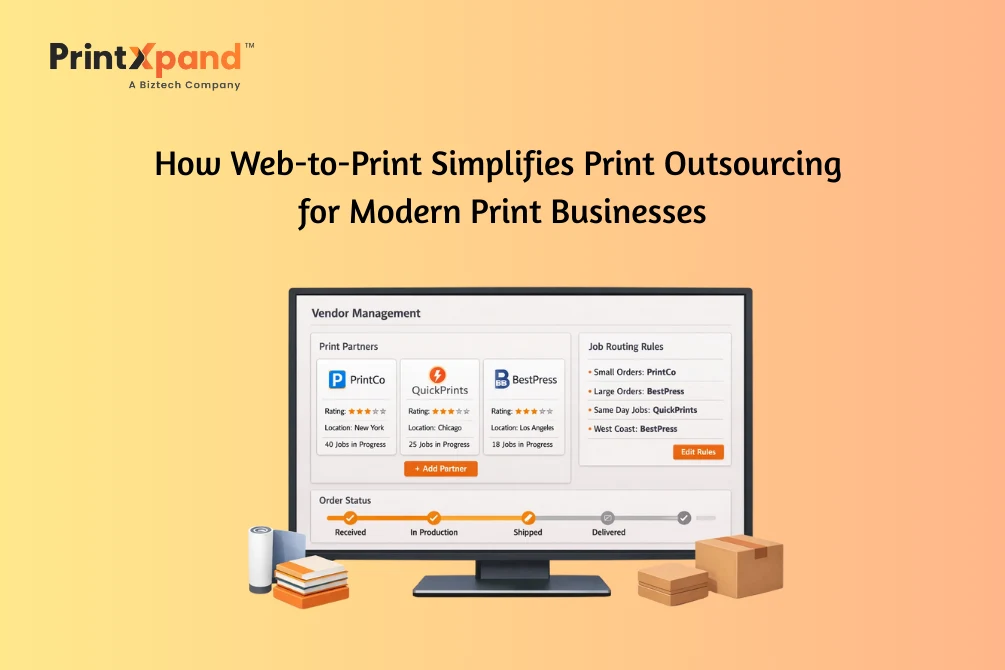
PrintXpand built a Print Partner Module specifically for shops that work with outside vendors. You onboard partners, set up their capabilities and pricing, and manage everything from one dashboard.
Job routing runs on rules you define. Product type, geography, turnaround, cost thresholds — orders go to the right partner automatically. Once assigned, tracking keeps everyone in the loop. Admins, vendors, and customers get real-time status updates without phone calls.
If you’re running a web-to-print storefront, orders will flow straight into your outsourcing workflow. Customers order online, artwork gets validated automatically, and jobs are routed to partners with zero manual handoff.
Custom workflows handle different product categories. Maybe you print business cards in-house, but send wide-format to a specialty shop. The system matches how you actually work and adapts to it, so your workflow isn’t disrupted by a new addition.
Proofing and communication stay documented. Timestamps on everything. No more arguing about who said what. And because admin overhead doesn’t scale with volume, you can add services, enter new markets, bring on new partners — without adding staff or equipment.
When to Use Web-to-Print for Print Outsourcing
Outsourcing is not the solution for everything, but it makes sense in specific situations like:
Overflow and peak seasons: Demand spikes beyond your capacity. Route the excess to partners instead of turning work away.
New products without new equipment: Test whether customers want wide-format or packaging before committing to a major purchase.
Multi-location fulfillment: Partner with regional printers who can produce and ship faster than you could from one central shop.
Big marketing campaigns: Clients needing thousands of pieces across formats and locations need coordinated print outsourcing to deliver consistency.
White-label for agencies: Serve marketing firms who need reliable print production. They get great output. You keep your vendor network private.
Take Control of Your Print Outsourcing Workflow
Print outsourcing is a more innovative way of operation that says yes to opportunities you’d otherwise turn down. Web-to-print technology turns coordination headaches into an actual competitive advantage.
PrintXpand gives you a comprehensive ecosystem with vendor management, automated workflows, and real-time tracking — to scale without the chaos. Want to see how it works? Check out PrintXpand’s Print Partner Module and start building a more flexible print operation today.